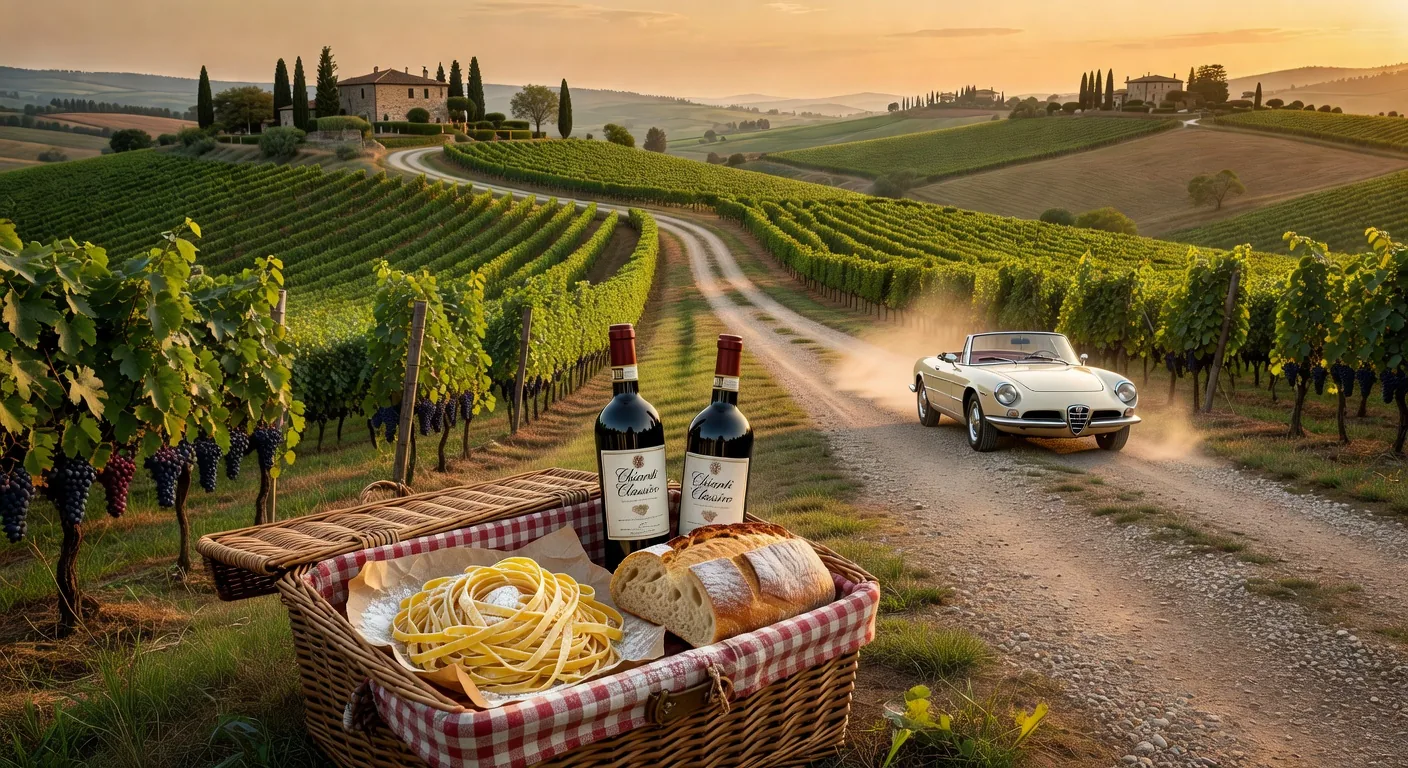
The argument about pasta — where it truly comes from, which region makes it best, whether dried or fresh represents the superior form — is one of Italy's most passionately contested cultural debates. I drove from Naples to Bologna over eight days to taste my way through it, and I arrived in the north with no definitive answer and an extraordinarily full stomach.
Italy's pasta culture is not a single tradition. It is a patchwork of intensely local practices, each region convinced that its particular approach represents the correct and original one. In Naples, pasta is dried, industrial in scale, made from hard durum wheat and eaten al dente to a degree that Northern Italians find alarming. In Emilia-Romagna, pasta is fresh, egg-rich, hand-rolled, and treated with the seriousness of a religious rite. Both are right. Both are extraordinary.
"In a small trattoria on the outskirts of Benevento, a woman named Rosa explained that she had made pasta every morning since she was seven years old. She was 83. That's roughly 27,000 handmade pasta mornings. The tagliatelle was, predictably, incomprehensible in its perfection."
Naples: The Birthplace of Dried Pasta
30-1 Hagyuda-cho
Utsunomiya City, Tochigi 321-0127, Japan
The spaghetti alle vongole — clams, white wine, olive oil, and the briny water they release as they open — at a table outside a Pozzuoli harbour restaurant is where this road trip begins properly. The clams are the size of thumbnails. The pasta is perfectly al dente in the Neapolitan sense, which means it has real resistance left in it. The combination is bracingly, uncomplicatedly delicious in a way that makes you understand why people find Italian food so emotionally overwhelming.
The Apennine Middle: Where Both Traditions Meet
The road north from Naples climbs into the Apennine mountains, and the pasta culture shifts subtly with every hundred meters of elevation. In Campania's inland towns, you find pasta baked into timballi — elaborate cylindrical pies — and used in thick, ancient soups that feel like they belong to a different cuisine entirely than the coastal restaurants below.
Bologna: Where Pasta Becomes Art
Bologna calls itself "La Grassa" — the fat one — and this is meant as the highest possible compliment. No Italian city takes its food more seriously, and no Italian food tradition is more thoroughly codified than the fresh pasta of Emilia-Romagna. The tagliatelle width (8mm when cooked, which corresponds to 1/12,270th of the height of the Asinelli Tower) was formally registered at the Bologna Chamber of Commerce in 1972. This is not the behaviour of a region that treats pasta casually.
The sfogline — the women who roll pasta by hand — are the unsung legends of Bolognese food culture. Many work in the traditional pasta shops (pasta fresca) that line streets like Via Pescherie Vecchie in the Mercato di Mezzo. Watching a sfoglina work is like watching someone speak a language they've spoken since childhood — fast, unconscious, utterly fluent. The pasta sheets she produces are translucent, almost impossibly thin, yet structurally perfect.
🚗 The Pasta Road: Route Essentials
- Start: Naples (Piazza Garibaldi) — End: Bologna (Piazza Maggiore)
- Total distance: 680 km across 8 days
- Best season: April–June or September–October
- Don't miss: Gragnano factory tours (book 2 weeks ahead)
- Key stop: The mercato in Norcia for truffle pasta supplies
- Budget tip: Eat the lunch menu (menu del giorno) for the best value at serious restaurants