I drove from Hermosillo to Oaxaca alone in January with no reservations, no fixed itinerary, and one firm objective: to find the best taco in Mexico. I'm aware that's not a finite goal. Mexico has approximately 400 varieties of regional tacos and an estimated 35,000 taco stands operating in Mexico City alone. But this is not a comprehensive survey. It's a road trip. You follow your instincts, trust the smoke signals, and pull over when something smells right.
The Sonoran desert is not where most food travellers begin a culinary pilgrimage. It's vast, sun-bleached, and unforgiving — the landscape of Westerns and border mythology. But Sonora is also where the carne asada taco was perfected, where beef cuts unknown outside the state are grilled over mesquite wood on open-air parrillas, and where the flour tortilla — yes, flour, not corn — was elevated to an art form by centuries of cattle-ranching culture.
"The woman at the taco stand in Altar had been making the same flour tortillas since 4 AM. By the time I arrived at 7:30, she'd made several hundred. Each one was perfectly round, perfectly thin, perfectly blistered in just the right places. She charged me 20 pesos for two tacos. I wanted to stay forever."
Hermosillo: The Carne Asada Capital
Hermosillo is the capital of Sonora and the undisputed king of the carne asada. In the early evening, as the desert heat finally relents, the city's taquero culture comes alive. Carts appear on street corners; the smell of mesquite smoke drifts through neighbourhoods; the sound of beef hitting hot metal is a kind of urban percussion.
The Sonoran carne asada differs from its cousins in other Mexican states in several ways. The cut most commonly used is the arrachera — skirt steak, marinated and grilled hot and fast. The tortilla is always flour — large, soft, almost elastic — and the accompaniments are specific: a particular salsa ranchera made with multiple dried chiles, beans, and a fresh salad of shredded cabbage, tomato, and avocado. The combination is so precisely calibrated that altering any element feels like sacrilege.
The Altar Valley & Backcountry Taqueros
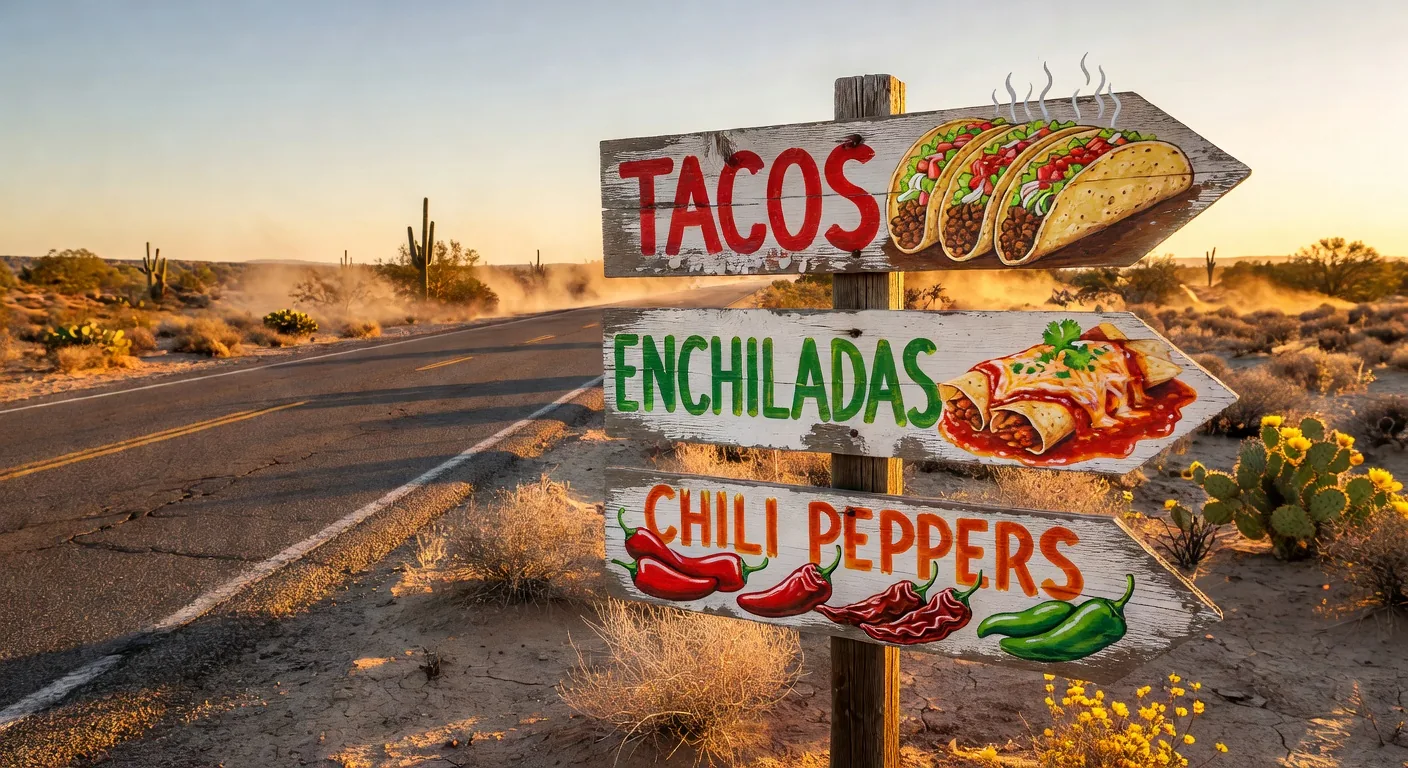
West of Hermosillo, the desert deepens. The towns become smaller, the road straightens out to an almost meditative flatness, and the taco stands become rarer — but dramatically better. In the backcountry towns where cattle ranching is still the primary economy, the tacos are not street food. They are the food of working people eating what they raise and slaughter and cook themselves, and the quality difference is stark.
🌮 Mexico's Regional Taco Atlas
Oaxaca: The Final Table
The road trip ends in Oaxaca — which is technically not Sonora, not even close, but the route I chose follows the ancient trade paths that once connected the northern cattle country to the southern agricultural heartland. Oaxaca is where the complexity of Mexican food becomes fully apparent. This is the state of seven moles, of tlayudas as large as pizza wheels, of mezcal drunk ceremonially, of the Benito Juárez market where every variety of dried chile in Mexico seems to be available simultaneously.
🚗 Desert Taco Route Essentials
- Start: Hermosillo — End: Oaxaca City
- Total: 1,200 km across 10 days
- Best season: November–February (before desert heat)
- Essential apps: iOverlander (for roadside finds), Google Maps offline
- Frontier cash rule: Always carry pesos — many best taco stands are cash only
- Security note: Research current travel advisories for border regions